Control valve, pneumatic diaphragm.
A globe-valve body topped by a rectangular diaphragm bonnet. The most common control-valve symbology on a process P&ID. The air signal in the upper rectangle modulates the diaphragm and the diaphragm modulates the plug.
Three drawings included on a new account.
How it's drawn.
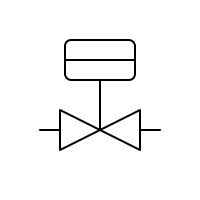
A valve body with a rectangular diaphragm bonnet on top, the most common control-valve shape on a process drawing. The actuator air signal works the diaphragm and the diaphragm works the plug, so the body modulates flow under a controller. The tag follows the loop. The final element shares the loop number with its transmitter and controller.
Typical usage.
Wherever a BPCS PID controller drives a final element. Feed flow, reactor jacket, level control on a vessel boot. Tag follows the loop convention. FV-101 if the loop is FT-101, FIC-101, FV-101.
Telling it apart.
- The diaphragm bonnet on top is the control marker. A bare body with only a handwheel is a manual valve.
- The valve tag belongs to the control loop. A control valve is the final element of a loop that also has a transmitter and a controller.
- Fail action, drawn or noted as fail-open or fail-closed, is a separate property from the valve body and matters for safety.
Related.
Read every symbol on the sheet.
A globe-valve body topped by a rectangular diaphragm bonnet. The most common control-valve symbology on a process P&ID. The air signal in the upper rectangle modulates the diaphragm and the diaphragm modulates the plug.
Three drawings included on a new account.